|
DC Solar Refrigerators and
Freezers
|
|
|
Click for larger view
|
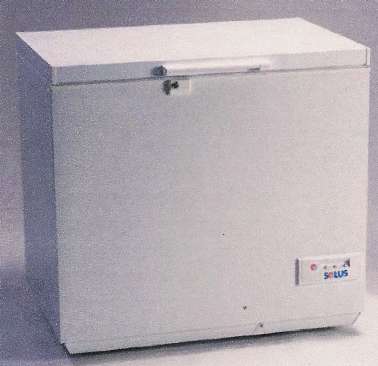
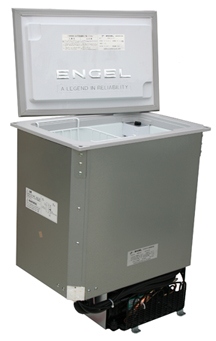
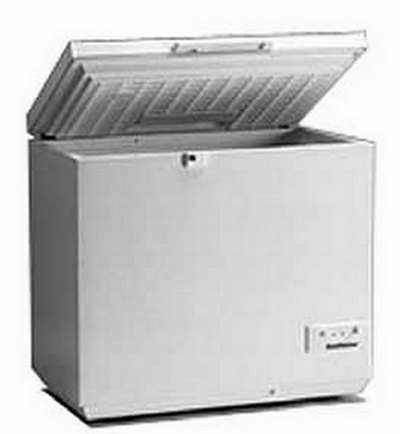
SunDanzer chest-style DC refrigerators and freezers offer low maintenance and
highly efficient operation. A super quiet compressor and fan make
these nearly silent. You can save on system costs with SunDanzer
battery-powered units; these have low energy consumption and require a
smaller PV system for your refrigeration and freezer needs. These
units feature 4.33" (11 cm) of polyurethane insulation and are
finished in coated steel cabinets. The brushless DC motor
compressor operates on 12 or 24 VDC. A patented low-frost system
in the freezer units reduces frost build-up for low maintenance. They
are easy to clean using the drain hole at the bottom. |
|
|
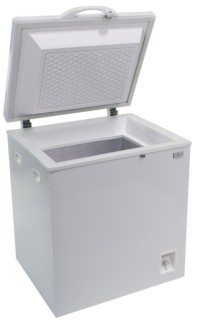
DCR50/DCF50
Click for larger view
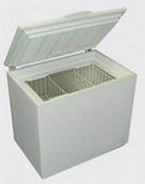
DCR160 / DCF160
Click for larger view.
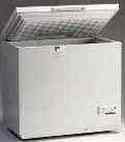
DCR238 / DCF238
Click for larger view.
|
***************
For areas with less than four full sun-hours
per day, we offer battery-powered units that can run off of 12
or 24VDC (and on a single 75W module in most climates!)
These high efficiency refrigerators and freezers have
exceptionally low energy and consumption, requiring smaller,
less expensive power systems and low operating expense.
High quality construction provides excellent reliability and
long life. Super-insulated cabinets feature 11cm of polyurethane
insulation with a powdered-coated galvanized steel exterior and
an aluminum interior. A zero-maintenance, brushless,
thermostatically controlled DC compressor operates on 12 or 24
VDC. A patented low-frost system reduces frost and moisture
build-up for low maintenance. These chest-style refrigerators
and freezers are easy to clean using the drain hole at the
bottom of the unit.
Low energy consumption is the key that allows SunDanzer
refrigerators and freezers to be cost effectively powered from
solar, wind, fuel cells or batteries. This technology allows
refrigeration in remote locations where it was previously
unavailable or prohibitively expensive.
You can also get
an AC conversion on your SunDanzer (for $125) done at the
factory, that allows operation off AC power; you can still
operate it as needed off DC, but once the conversion is done,
its primary power source will be AC.
All of these units
are manufactured by Electrolux, one of the world's leading
manufacturers of quality refrigerators and freezers. All
SunDanzer products also feature a one-year manufacturer's
warranty.
Click
DCR160/DCF160 /
DCR238/DCF238 to view the
inside dimensions. |
NOTE: Appliances are not stocked locally and ship
from our
supplier in the Southwest.
********** |
| Part # |
Description |
Capacity |
Shipping Dimensions
(W" x D" x H") |
Shipping
Weight |
Cost* |
| DCR50 |
Battery-Powered Fridge |
1.8 cu.ft. |
|
|
$1099 |
| DCR160 |
Battery-Powered Fridge |
165 liter
5.8 cu.ft. |
40 x 30 x 37 |
113 lbs. |
$1099 |
| DCRF450 |
Battery Powered Fridge, Freezer |
15 cu.ft. |
(click
for picture) |
|
$1999 |
| DDR160 |
Direct-drive Solar Fridge |
165 liter
5.8 cu.ft. |
36.8 x 26.2 x 34.5 |
130 lbs. |
$1174 |
| DC50 |
Battery-Powered Fridge |
1.8 cu.ft. |
|
|
$699 |
| DC100 |
Fridge or
Freezer |
3.5 cu.ft. |
|
|
$599 |
| DCF160 |
Battery Powered Freezer |
165 liter
5.8 cu.ft. |
40 x 30 x 37 |
113 lbs. |
$1099 |
| DCF400 |
Battery Powered Freezer |
14 cu.ft. |
(click
for picture) |
|
$1499 |
|
|
|
* Listed cost is for 12 or 24 volt
units. Add $75 for 48 Volts.
Energy Consumption Data on the Battery-powered Units at a Given
Ambient Temperature |
| Model |
70° (21.1°C) |
90°F (32.2°C) |
110°F (43.3°C) |
|
Watt Hours Per Day |
| DCR160 |
77 |
168 |
348 |
| DCRF450 |
|
|
|
| DCF160 |
272 |
441 |
766 |
| DCF400 |
|
|
|
|
Amp Hours Per Day @ 12VDC |
| Model |
70° (21.1°C) |
90°F (32.2°C) |
110°F (43.3°C) |
| DCR160 |
6.5 |
14.0 |
29.0 |
| DCRF450 |
|
|
|
| DCF160 |
22.6 |
36.7 |
63.8 |
| DCF400 |
|
|
|
|
Amp Hours Per Day @ 24VDC |
| Model |
70° (21.1°C) |
90°F (32.2°C) |
110°F (43.3°C) |
| DCR165 |
3.2 |
7.0 |
14.5 |
| DCR225 |
3.8 |
8.2 |
16.4 |
| DCF165 |
11.3 |
18.4 |
31.9 |
| DCF225 |
15.0 |
22.1 |
34.1 |
|
|
Notes on test results (above) and energy
consumption: refrigerator and freezer performance and energy
requirements vary with the ambient (external) temperature, internal
temperature (thermostat set-point) and appliance usage (opening and
closing the door). Standard performance test data assume an
average internal temperature of 38°F (3.3°C) for the refrigerator and
10°F (-12.2°C) for the freezer (this represents the middle thermostat
set-point). During the test, there is no cold or frozen food
inside, and no door openings. In practice, the 90°F (32°C) load
rating for a refrigerator or freezer approximates real-life usage
with an ambient temperature of about 75°F (24°C). Initial
warm-start operation, commercial use, more frequent daily usage or large
quantities of warm (room temperature) food will also increase energy
consumption. Photovoltaic arrays and batteries must be sized
accordingly.
**********
|
|
Sometimes
there are cosmetically damaged units
available for a good deal. Call
us for current availability and pricing at 406 777-4309.
********** |
|
Other models include the
DCF400 and DFRF450
Call 1-406-777-4309 for more information
|
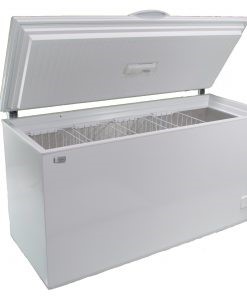
DCF 400
$1499 |
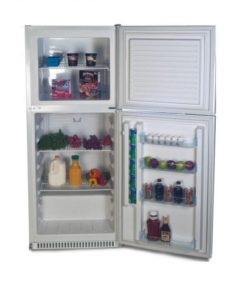
DCRF 450
$1999 |
|
(prices do not include freight) |
NOTE: These are not
stocked locally and ship from our supplier in the Southwest.
Please call us for a freight rate.
WHAT TRUCK FREIGHT ENTAILS:
The best rate for truck freight shipping is to have you pick it up at
the local freight terminal or commercial drop point. A residential
delivery is usually $40 to $45 more than a business delivery, and, a
lift gate (which drops the goods off at ground level), is another $80 to
$100 in additional fees. Inside delivery is an additional cost on
top of that.
Know someone with a truck? Can you have a dolly or hand cart on
hand? If you can mobilize a couple of strong bodies, you might be
able to save $40 to as much as $120 or so on your freight costs.
Call for your freight on any of our truck freight items.
Note: the above refrigerators and freezers are shipped on a pallet
surrounded by heavy, double-corrugated cardboard. For export
shipments, add $50 for additional export crating.
NOTE ABOUT RECEIVING TRUCK FREIGHT
ITEMS: Do not sign for anything until you have
inspected your unit. You have spent good money on this, and it was
shipped in good condition. If you don't inspect it, and open the
unit at home and find 'hidden damage', there is no recourse for a truck
freight claim. All claims for damage MUST be made at the time of receipt
of the unit! Note any damage on the bill of lading before signing
off--it's a relatively easy process to get a new unit or replacement
parts if you do so. But not if you don't inspect it! Also,
don't refuse an obviously damaged unit. You will still be charged
for it, as we will also be by our suppliers. Freight damage is
very rare (FORTUNATELY!), but proper documentation and reporting of any
damage will expedite the claims process. |
|
|
|